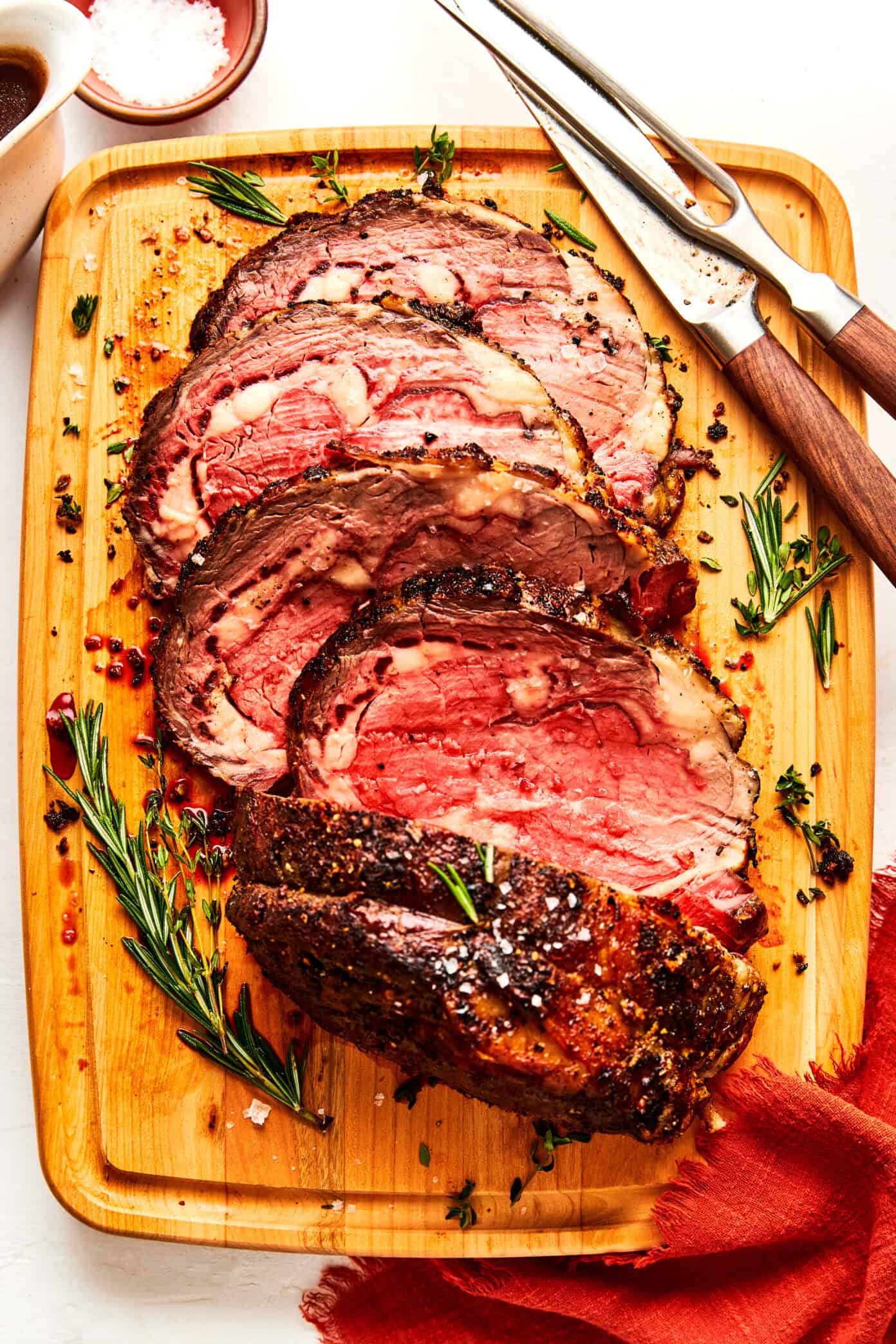
Prime Rib, Perfected.

This prime rib is such a showstopper. ♡
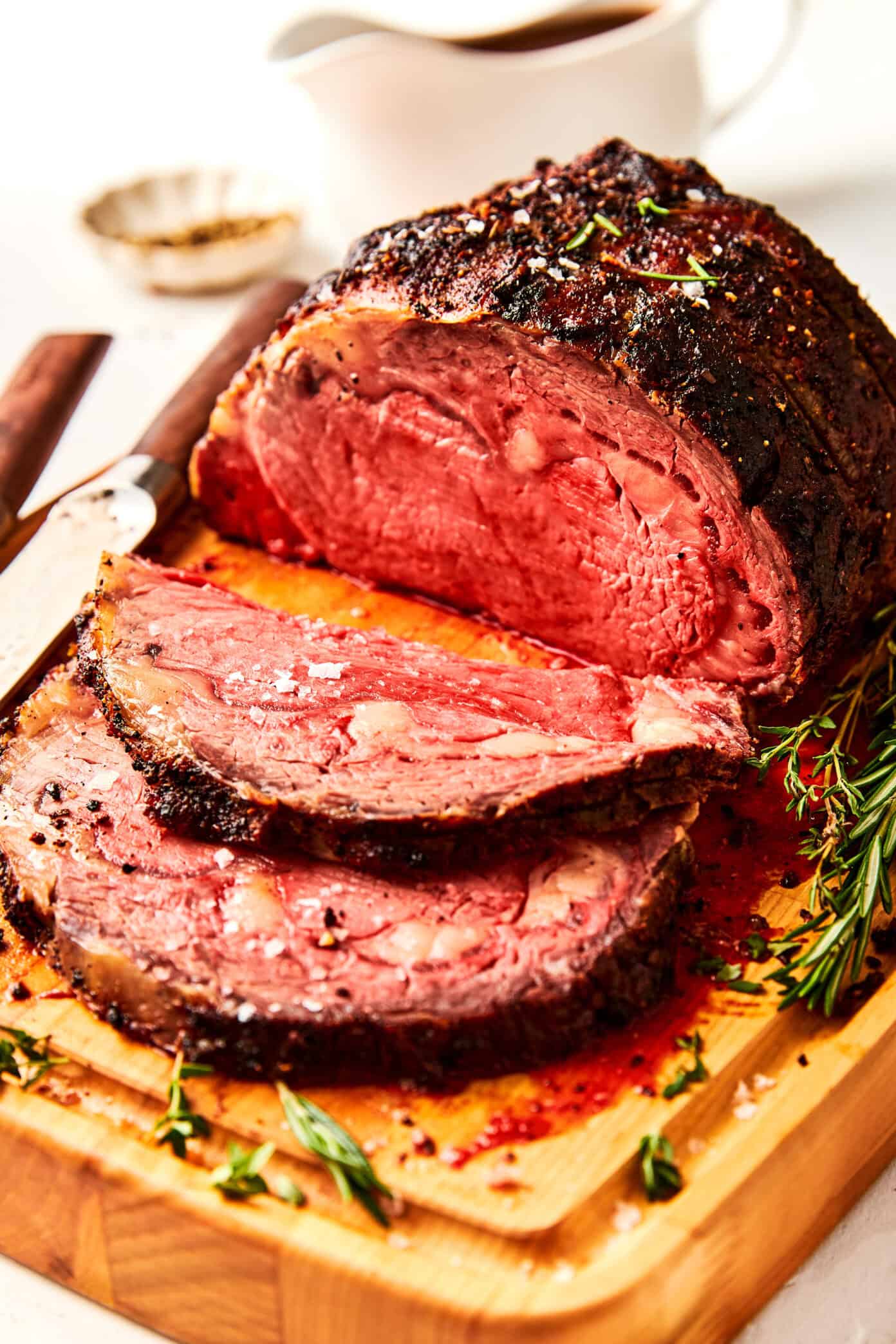
And since I’m well aware that it’s also a splurge, I promise this recipe is extra flavorful and foolproof too — thanks especially to a reverse-sear method that locks in your ideal doneness and creates the most irresistible savory crust!
From the garlic-herb butter to the slow roast to the richly caramelized pan drippings that turn into the dreamiest au jus, I’ve tested and retested every step of this recipe with one goal in mind: to keep the process legit low-fuss while delivering the incredibly rich flavor this special cut deserves.
So whether you’re preparing this prime rib roast for a holiday feast or a celebratory dinner, you’re in for such a memorable treat. Let’s make some prime rib!
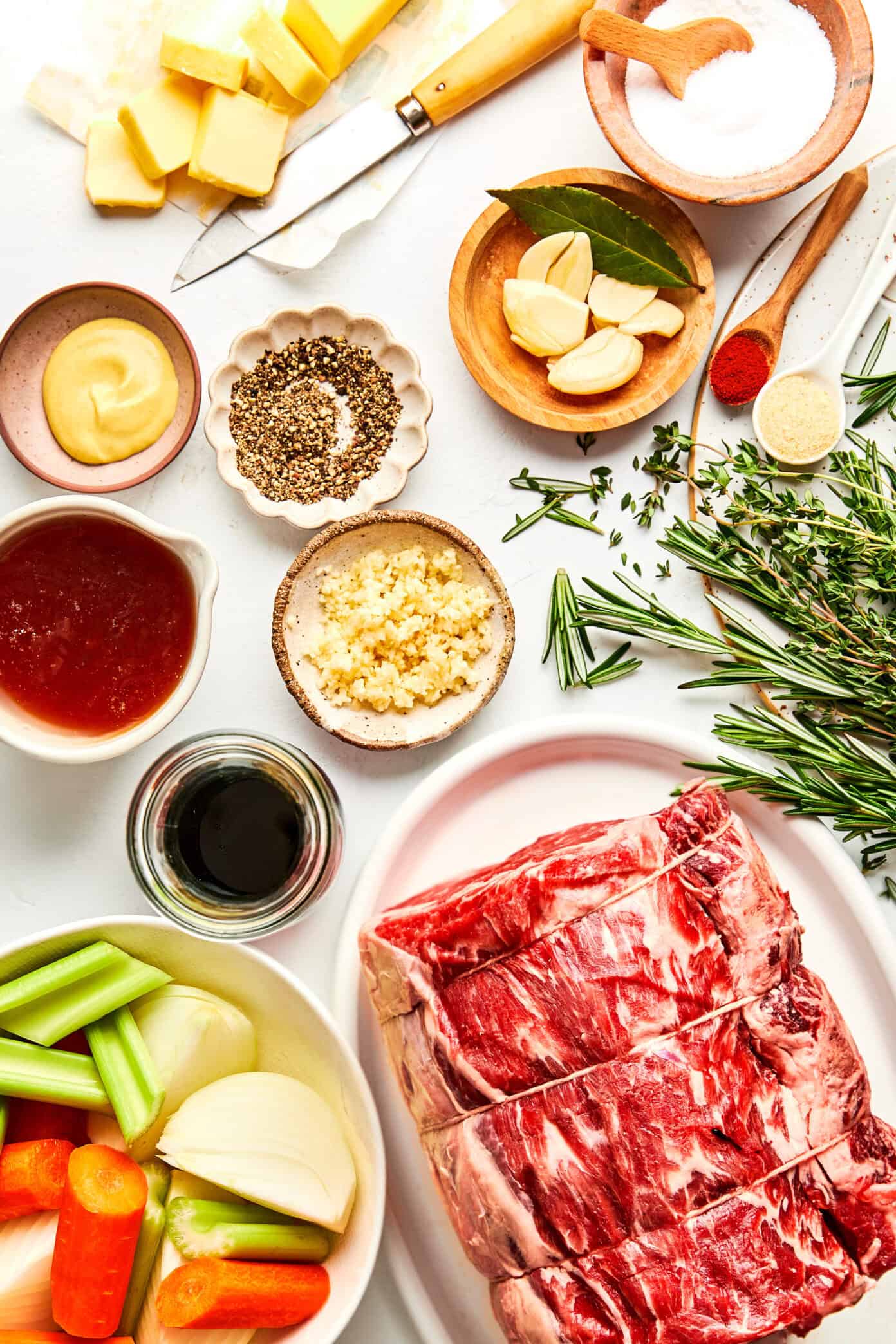
How To Buy Prime Rib
Choosing the right cut is half the battle with prime rib, especially when you’re splurging on a special-occasion roast. Here are a few simple tips to help you shop with confidence:
- Look for a “standing rib roast.” Prime rib is just the common name — you’ll often see it labeled as a standing rib roast at the butcher counter. Both terms refer to the exact same cut!
- Bone-in vs. boneless. I prefer bone-in for the best flavor and presentation. The bones help insulate the meat during cooking, keeping it extra tender and juicy. But boneless cooks a bit faster and slices more easily, so choose whichever works best for you.
- Choose USDA Prime or Choice. “Prime” offers the most marbling (and the best flavor), but “Choice” is still excellent and often slightly more budget-friendly. Either will give you great results.
- Buy the proper size. Plan on about 1 pound per person for a bone-in roast or ¾ pound per person for boneless. If you’re feeding big appetites or want leftovers, go for slightly more!
- Ask the butcher to trim and tie it. Ask the butcher to trim the excess fat and remove and re-tie the rib bones onto the roast for you, which makes carving a breeze while still giving you all the flavor benefits of bone-in roasting.
- Look for good marbling. More fine streaks of fat = more flavor and tenderness. Prime rib is naturally well-marbled, but it’s always worth choosing the roast with the most even distribution.
Recipe Tips
A few tips to help your prime rib come out perfectly every single time:
- Don’t skip the dry brine. It seasons the meat all the way through and helps achieve that amazing crust! Overnight is great, but 24–48 hours is even better.
- Let it truly come to room temp. This is super-important for even cooking. Budget enough time for the roast to rest the full 3–4 hours before it goes in the oven.
- Use an instant-read thermometer. Prime rib is all about doneness. Pull it out of the oven at 120°F for medium-rare or 125°F for medium. The temperature will rise a bit more as it rests.
- Low and slow = ultra tender. Roasting at 250°F ensures the meat cooks gently and stays incredibly juicy, so resist the urge to speed up the process.
- Resting is non-negotiable! This is when the juices redistribute so your slices don’t run dry. Aim for at least 20 minutes before slicing.
- Make the au jus while the roast rests. Use every bit of those browned drippings — they’re liquid gold!
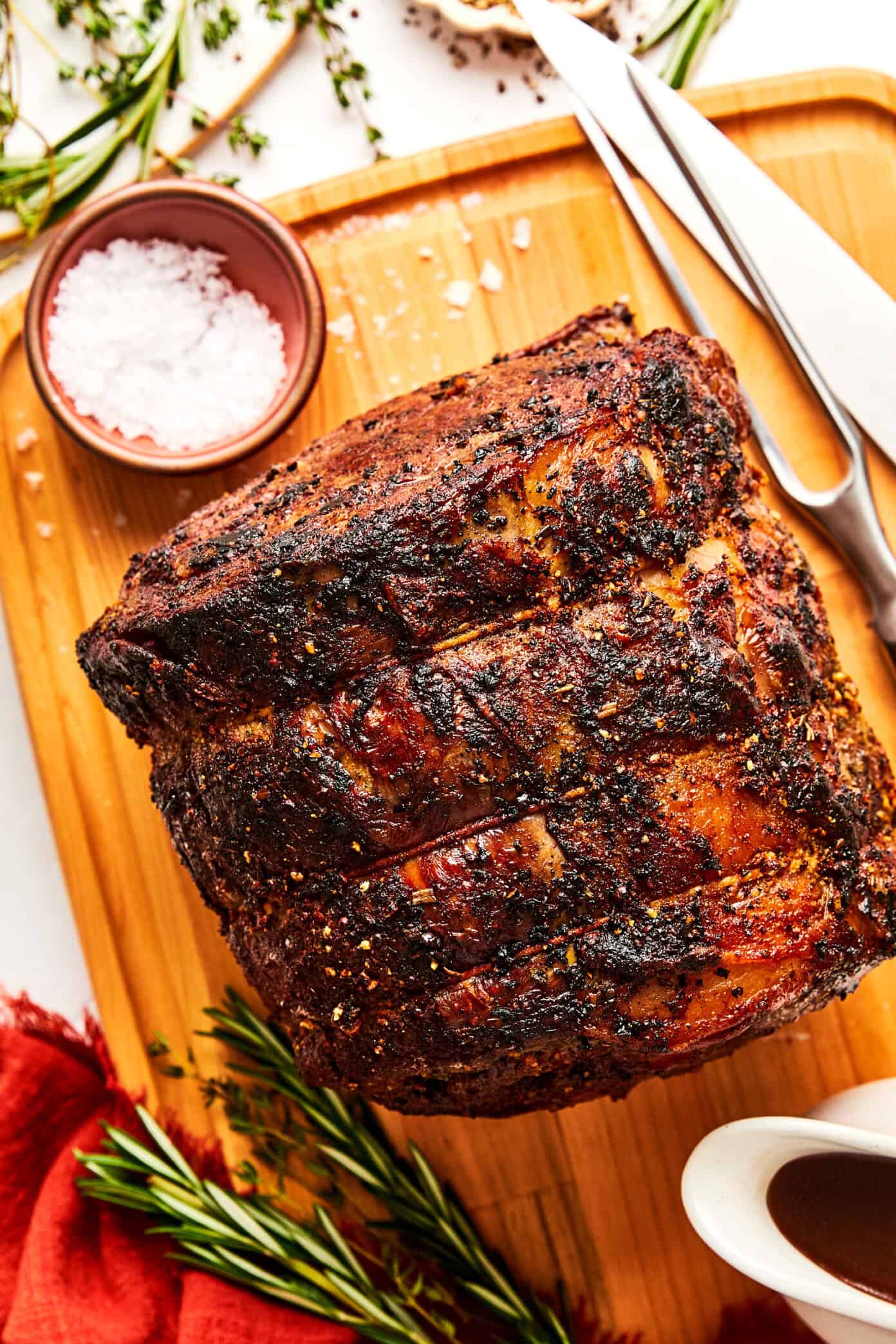
Recipe Variations
Feel free to customize your prime rib! Here are some tasty ideas:
- Add horseradish. Add ½–1 teaspoon to the herb butter for a little extra heat.
- Swap the herbs. Sage, marjoram, or parsley all work beautifully.
- Use white wine instead of red. Use your favorite dry white wine for a lighter, more delicate au jus.
- Add mushrooms. Add baby bella mushrooms to the roasting pan for mushroom-infused drippings.
FAQ
Plan for about 1 pound per person for bone-in roasts (or 1½ pounds for very hearty eaters or big holiday spreads).
Even 2–4 hours helps! But if you can swing the full overnight dry brine, the flavor payoff is worth it.
Absolutely — just substitute extra beef stock. You may want to add a splash of Worcestershire for extra depth.
Warm slices gently in a 250°F oven, wrapped in foil with a bit of au jus, for about 10 minutes or until heated through.
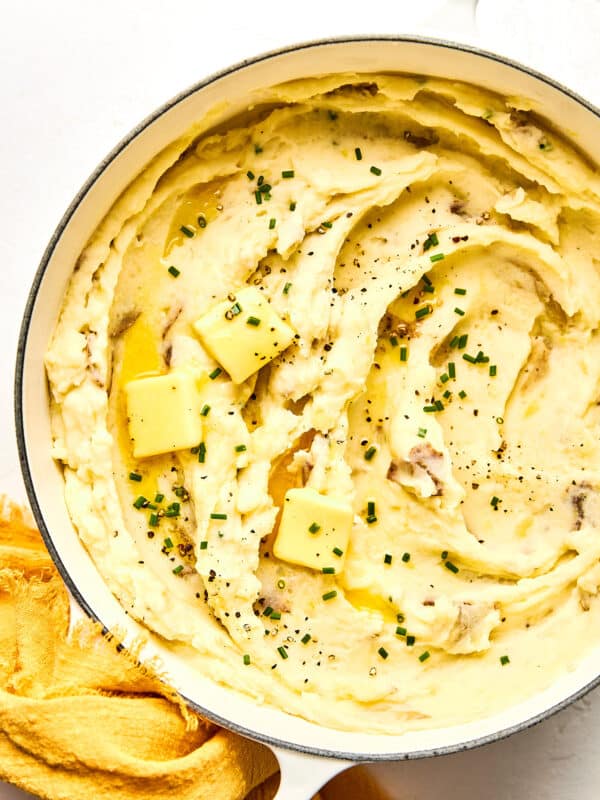
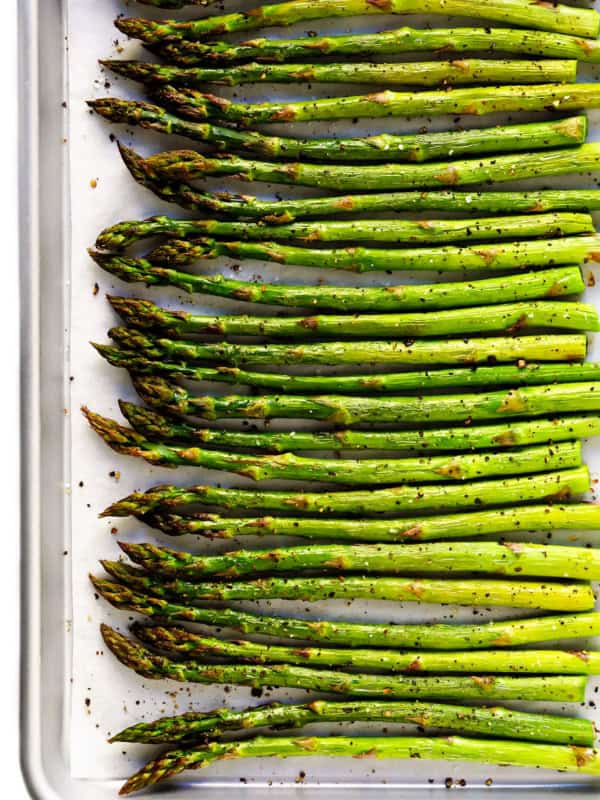
What To Serve With Prime Rib
Garlic Herb Prime Rib with Au Jus
- Prep Time: 20 mins
- Cook Time: 3 hours 30 mins
- Total Time: 4 hours 15 mins
- Yield: 6 to 8 servings 1x
Description
This easy prime rib recipe features a flavorful garlic-herb butter, a foolproof reverse-sear method, and a rich homemade au jus for the perfect holiday or special-occasion roast.
Ingredients
For the Prime Rib:
- 1 bone-in standing rib roast (6–8 pounds), ribs removed and tied to the roast
- 2 tablespoons kosher salt
- ½ cup unsalted butter, softened
- 2 tablespoons finely-chopped fresh rosemary
- 1 tablespoon finely-chopped fresh thyme
- 3 large cloves garlic, very finely minced
- 2 teaspoons Dijon mustard
- 2 teaspoons freshly-ground coarse black pepper
- 1 teaspoon onion powder
- ½ teaspoon smoked paprika
For the Roasting Pan:
- 1 cup beef stock or water
- 1 medium yellow onion, peeled and quartered
- 1 medium carrot, roughly chopped
- 1 rib celery, roughly chopped
- 3–4 large garlic cloves, lightly smashed
For the Au Jus:
- ¾ cup dry red wine (such as Cabernet Sauvignon or Chianti)
- 3 cups beef stock
- 1 sprig fresh thyme or 1 small sprig rosemary
- 1 bay leaf
- fine sea salt and freshly ground black pepper, to taste
Optional (to thicken the au jus):
- 1 tablespoon cornstarch
- 1 tablespoon cold water
Instructions
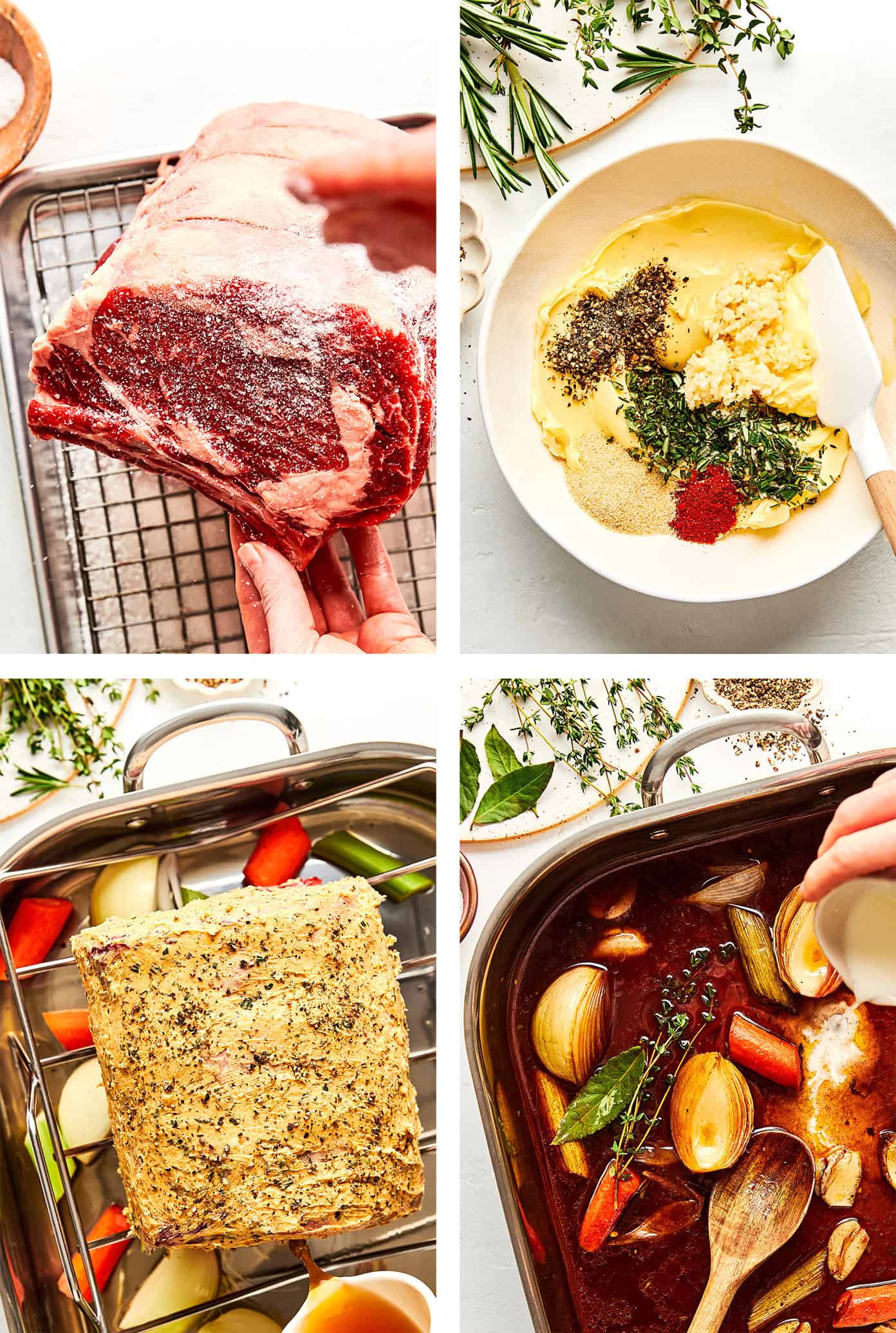
- Dry-brine the roast. Pat the prime rib very dry with paper towels. Season generously with kosher salt on all sides. Place the roast on a wire rack set over a rimmed baking sheet and refrigerate uncovered for at least 12 hours (or up to 48 hours) to dry-brine.
- Bring to room temperature. Remove the roast from the refrigerator about 3 to 4 hours before cooking to ensure it cooks evenly throughout. Preheat the oven to 250°F (121°C).
- Make the garlic-herb butter. In a small bowl, stir together the softened butter, rosemary, thyme, garlic, black pepper, onion powder, Dijon mustard, and smoked paprika until evenly combined.
- Assemble the roasting pan. Scatter the onion, carrot, celery, and smashed garlic in the bottom of a large roasting pan. Pour in the beef stock or water. Set a roasting rack over the vegetables, place the roast on the rack (fat-cap side up), and spread the garlic-herb butter evenly all over the meat. Season the roast generously with extra freshly-ground black pepper.
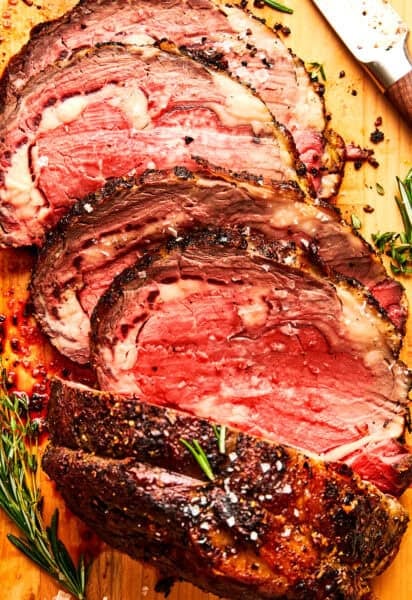
- Slow-roast. Transfer to the oven and roast until the internal temperature reaches 120°F for medium-rare or 125°F for medium, about 3 to 3½ hours, depending on your oven and roast size.
- Rest. Remove from the oven, tent loosely with foil, and let rest for 20–30 minutes to allow the juices to redistribute.
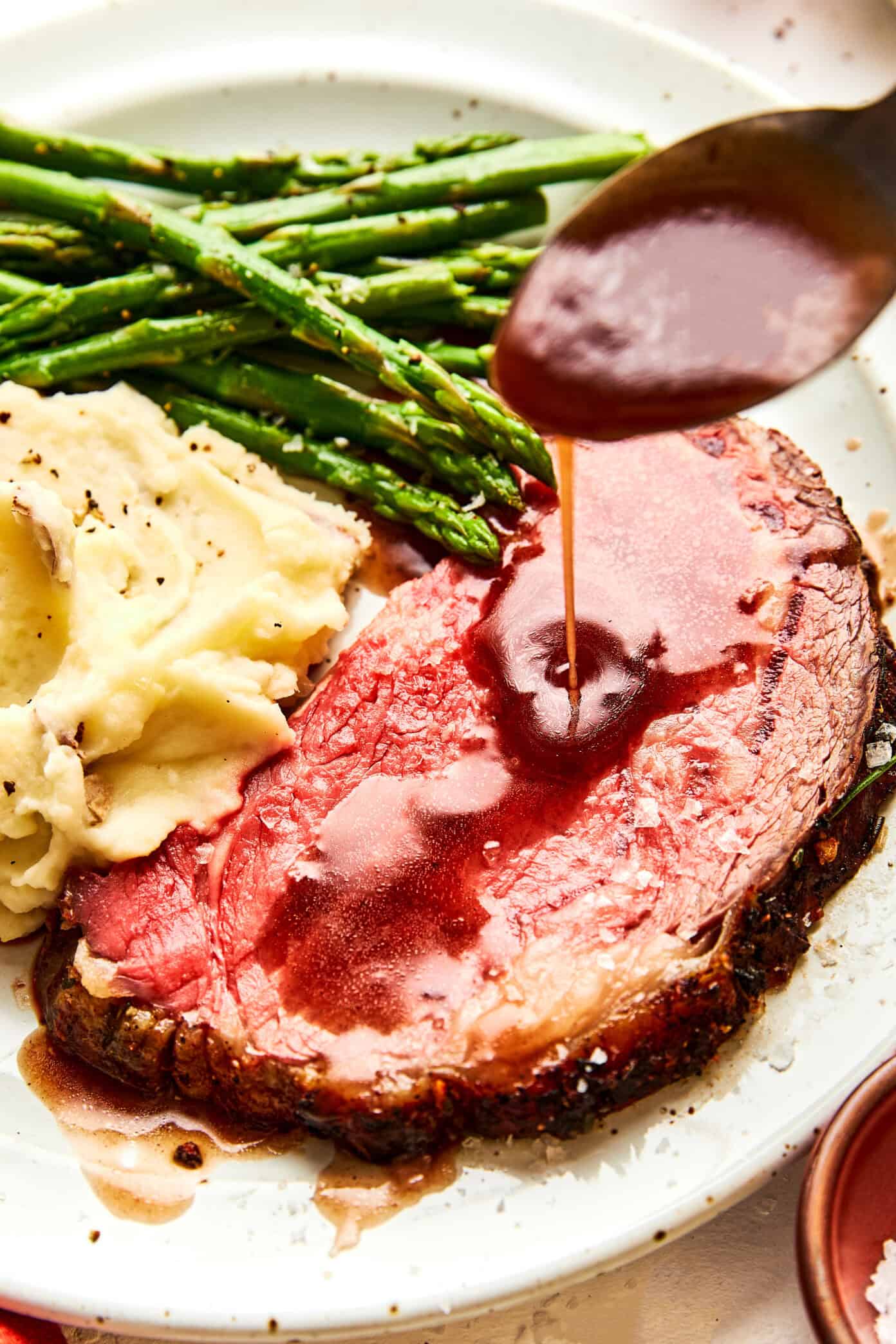
- Make the au jus (while the roast rests). Spoon or pour off most of the fat from the roasting pan, leaving just 2 to 3 tablespoons along with any browned bits. Place the pan over medium heat, add the wine, and simmer for 2–3 minutes, scraping up all of the caramelized drippings. Stir in the beef stock, thyme (or rosemary), and bay leaf, then simmer gently for about 10 minutes to let the flavors meld.
→ Tip: If your roasting pan isn’t stovetop-safe, transfer the browned bits and drippings to a saucepan and prepare the au jus there instead.
→ Optional thickening: Whisk together the cornstarch and cold water in a small bowl to form a slurry. Stir the slurry into the simmering au jus and cook for 1–2 minutes, until slightly thickened. Strain through a fine-mesh sieve, then season with salt and pepper to taste. - Sear. Heat a large cast-iron skillet over high heat with a tablespoon of a high heat oil (such as avocado oil) or beef tallow. Carefully transfer the rested roast to the hot skillet and sear on all sides for 1–2 minutes per side, until a rich, golden-brown crust forms.
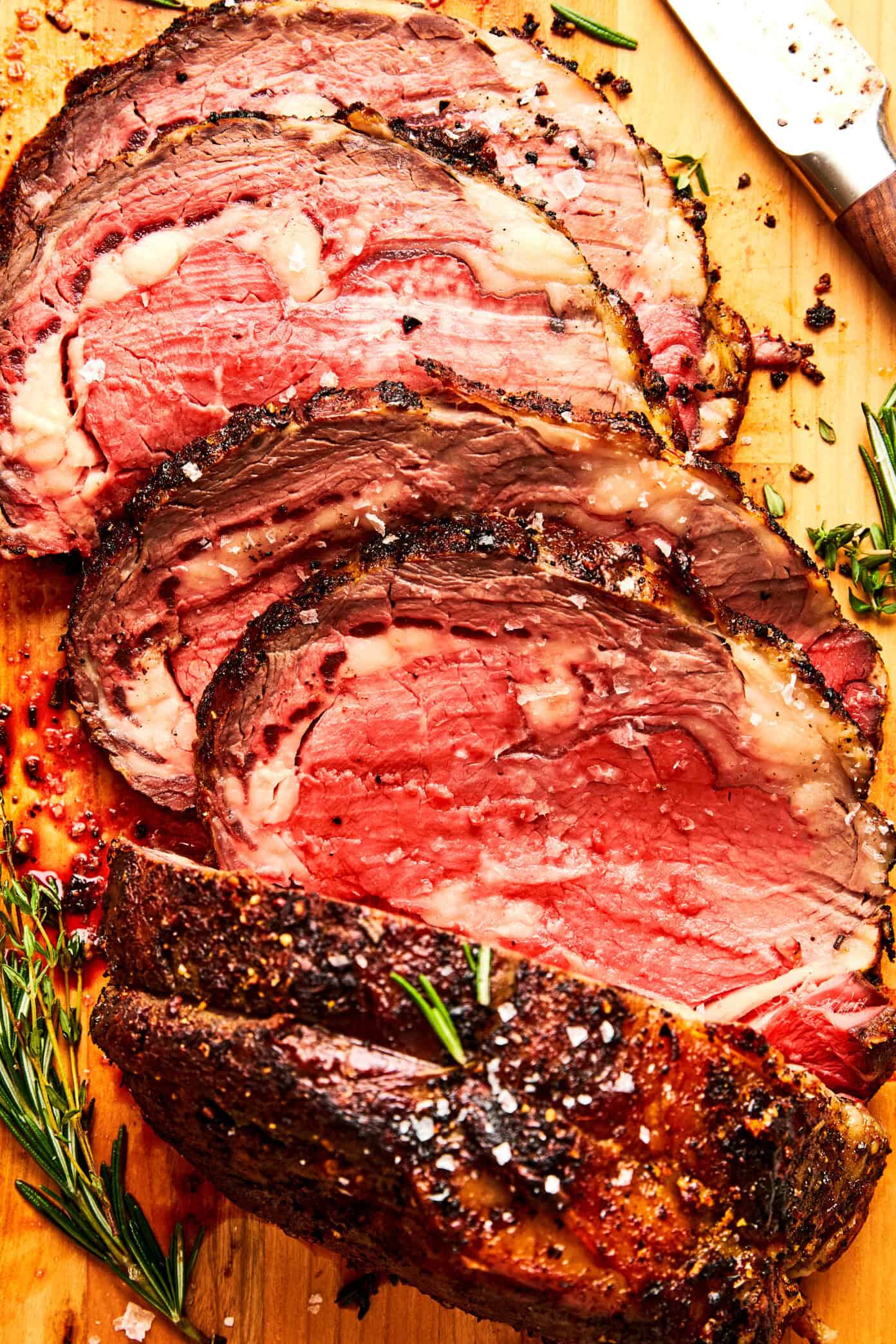
- Slice and serve. Remove the rib bones, slice the roast against the grain into ½-inch-thick slices, drizzle with warm au jus, and sprinkle with flaky sea salt just before serving.

I am making this recipe with a 4 bone 12 lb standing rib roast. How do I adjust the ingredients and cooking time.
Thank you
Yummy
Although this sounds really delicious, and I plan to use your recipe Wednesday, there is a repeated distraction.
“au Jus” translates to “with juice or sauce.”
Your title says “Prime Rib with with jus.” You make jus, not au jus.
Picky? Maybe, but you are publishing and sharing on the Internet forever.
There is no distraction. Clearly stated garlic herb prime rib with Au Jus